
⚔️ Bitcoin Cash vs Bitcoin SV: 7 Key Differences You Must Know in 2025
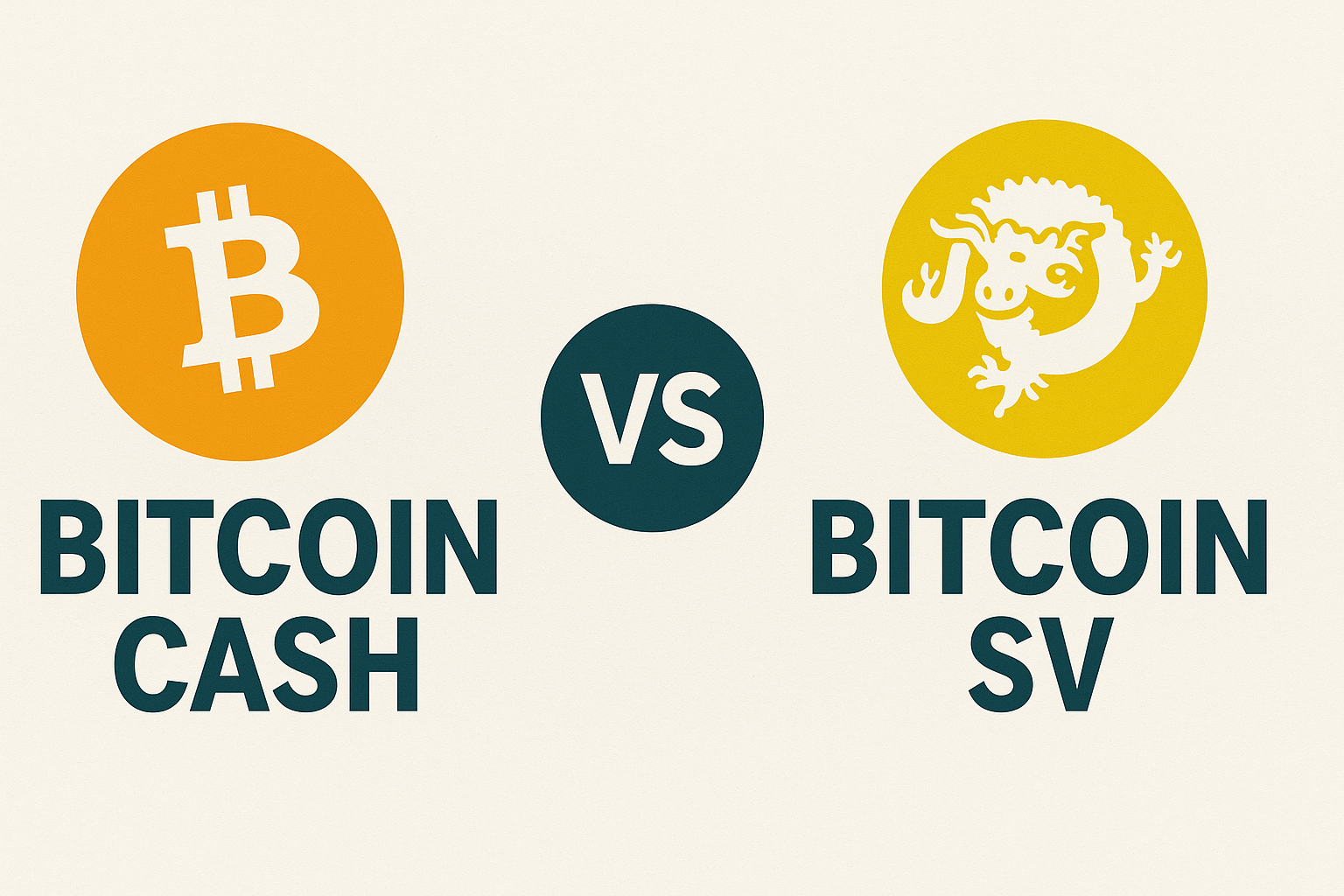
The Bitcoin ecosystem has seen several forks over the years, but two of the most well-known are Bitcoin Cash (BCH) and Bitcoin SV (BSV) — both claiming to be closer to the “true vision” of Bitcoin.
At bit2050.com, we break down Bitcoin Cash vs Bitcoin SV into 7 crucial categories to help you understand the history, technical specs, and real-world use of these controversial Bitcoin offshoots in 2025.
🧬 1. Origin & Fork History
-
Bitcoin Cash (BCH): Forked from Bitcoin in August 2017 due to disagreements about scalability and block size
-
Bitcoin SV (BSV): Forked from Bitcoin Cash in November 2018 after further disagreements about development direction
✅ BCH is a direct fork from BTC
✅ BSV is a fork from BCH
📏 2. Block Size and Scalability
-
BCH: 32MB block size
-
BSV: Block size is unbounded (can exceed 1GB)
✅ BSV allows for massive data on-chain, but critics argue it sacrifices decentralization.
⚙️ 3. Philosophy & Development Vision
-
BCH: Focuses on fast, low-cost peer-to-peer payments
-
BSV: Claims to be the “original Bitcoin protocol” per Satoshi’s whitepaper, focusing on enterprise-level scalability
✅ BCH aligns more with the original payment vision
✅ BSV aims to become a data processing and smart contract platform
💰 4. Adoption & Ecosystem Growth
-
BCH: Accepted by many merchants (via BitPay, NOWPayments)
-
BSV: Limited adoption but active in certain jurisdictions like Switzerland
✅ BCH has broader retail and e-commerce presence
✅ BSV has a niche enterprise focus, including tokenized databases and micropayments
🔐 5. Security & Centralization Concerns
-
BCH: Widely supported by open-source community and hardware wallets
-
BSV: Critics claim centralization under nChain and Craig Wright’s influence
✅ BCH is generally seen as more decentralized and open
🧠 6. Developer Ecosystem & Innovation
-
BCH: Active development community; supports CashFusion (privacy), Smart BCH (DeFi)
-
BSV: Development led by nChain and BSV Blockchain Association; supports Tokenized, Run, sCrypt
✅ BSV is more experimental with on-chain apps and tokens
✅ BCH focuses on proven, payment-first innovations
📊 7. Market Performance & Investor Confidence
| Feature | Bitcoin Cash (BCH) | Bitcoin SV (BSV) |
|---|---|---|
| Market Cap | ~$7B (2025) | ~$1.5B (2025) |
| Exchange Support | Widely supported | Delisted from some CEXs |
| Community Size | Larger, more active | Smaller, polarized |
| Public Image | Moderate acceptance | Mixed, controversial |
✅ BCH is more widely trusted by exchanges, wallets, and investors.
🧩 Useful Links (bit2050.com)
🌐 Resources
❓ FAQ – Bitcoin Cash vs Bitcoin SV
Q1: Which is better — Bitcoin Cash or Bitcoin SV?
A: It depends on your use case. BCH is more widely accepted and user-friendly for payments, while BSV targets enterprise-scale use cases.
Q2: Is BSV still listed on major exchanges?
A: Some major exchanges like Binance and Kraken have delisted BSV due to controversial leadership and low demand.
Q3: Can I use BCH and BSV with hardware wallets?
A: Yes. BCH is supported by Ledger, Trezor, and SafePal. BSV support is limited but available on a few platforms.
Q4: What was the reason behind the Bitcoin SV fork?
A: The split occurred due to a dispute over script functionality and protocol governance within the Bitcoin Cash community.
Q5: Is Bitcoin SV truly “Satoshi’s Vision”?
A: That claim is highly disputed in the broader crypto community. Bitcoin SV supporters believe so, but most developers do not agree.
✅ Final Thoughts
The battle of Bitcoin Cash vs Bitcoin SV is more than just a technical debate — it’s about philosophy, scalability, decentralization, and adoption. While BCH continues to push for practical, global payments, BSV carves out a niche as a data-heavy enterprise chain.
Whichever side you’re on, stay informed with the latest crypto insights and deep-dive comparisons at bit2050.com — your trusted source for next-gen blockchain education.