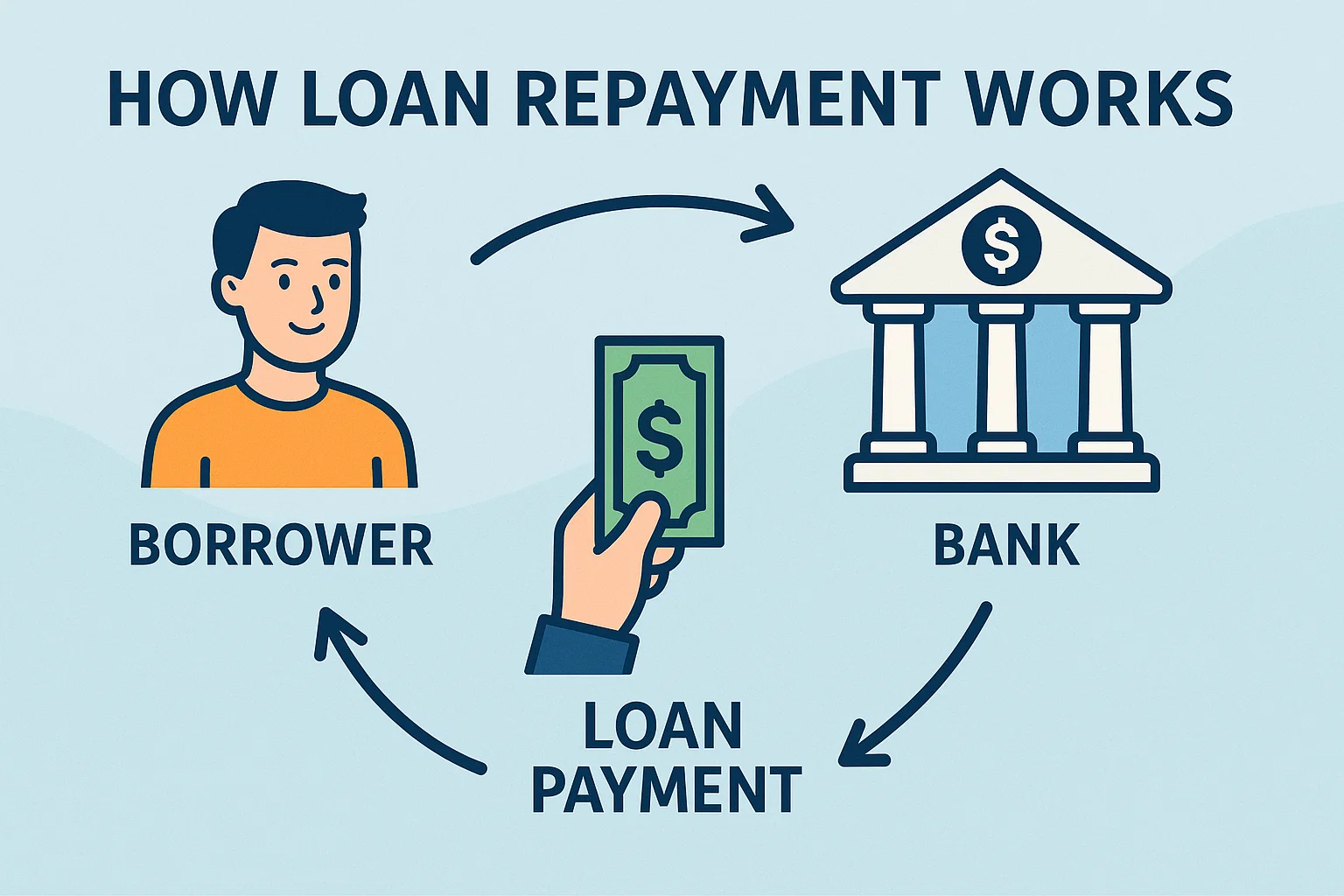
💡 How Loan Repayment Works: Smart Guide to Manage Debt in 2025
Loan repayment may sound simple — borrow money and pay it back over time — but the mechanics behind it can greatly affect your financial health. Understanding how loan repayment works helps you choose the best repayment plan, minimize interest, and become debt-free faster.
Here’s your complete 2025 guide on repaying loans smartly and efficiently.
🧾 1. What Is Loan Repayment?
Loan repayment is the process of returning borrowed money to the lender over an agreed period. The repayment amount typically includes:
You repay this in monthly installments, commonly known as EMIs (Equated Monthly Installments).
🔄 2. Components of an EMI
Your EMI consists of:
-
Principal component: gradually increases with time
-
Interest component: higher in early months, reduces later
This structure is called amortization.
📊 3. Types of Loan Repayment Plans
There are multiple repayment structures based on the loan type:
| Type of Loan |
Repayment Method |
Common Tenure |
| Home Loan |
Monthly EMI |
15–30 years |
| Personal Loan |
Monthly EMI |
1–5 years |
| Credit Card EMI |
Fixed Monthly Payment |
3–24 months |
| Education Loan |
EMI after Moratorium |
5–15 years |
| Car Loan |
Standard EMI |
1–7 years |
💸 4. Interest Rate Matters
Two types of interest rates:
Floating rates may save money if interest rates fall.
🛠️ 5. Prepayment & Foreclosure
✅ Benefits:
⚖️ 6. Tips for Smart Loan Repayment
-
Use an EMI Calculator before borrowing
-
Always pay EMIs on time to protect your CIBIL score
-
Try to increase EMI if your income rises
-
Use windfalls (bonus, gifts, tax refund) for prepayment
-
Avoid multiple loans at once
✅ Useful Links – bit2050.com
🌐 Resources
❓ FAQ – How Loan Repayment Works
Q1: Can I change my EMI amount?
Yes, some banks allow EMI adjustment if you request an increase/decrease in tenure or do a part prepayment.
Q2: What happens if I miss an EMI?
Missing EMIs results in penalties and damage to your credit score. Always try to set up auto-debit for EMIs.
Q3: Is foreclosure a good idea?
If you have extra cash and your loan has a high interest rate, foreclosure can save you thousands in interest.
Q4: Should I prepay or invest?
Compare your loan interest rate vs investment return. If your loan rate is higher, prepay. If not, invest.
Q5: Can I repay more than one EMI at once?
Yes, but ensure the excess payment is adjusted toward principal to reduce your overall interest.
🧠 Final Thoughts
Knowing how loan repayment works helps you stay financially healthy, avoid stress, and get out of debt faster. Whether you’re taking a home loan or a personal loan, being informed is empowering. Stay ahead in 2025 with smart loan planning from bit2050.com.