

🎯 Introduction
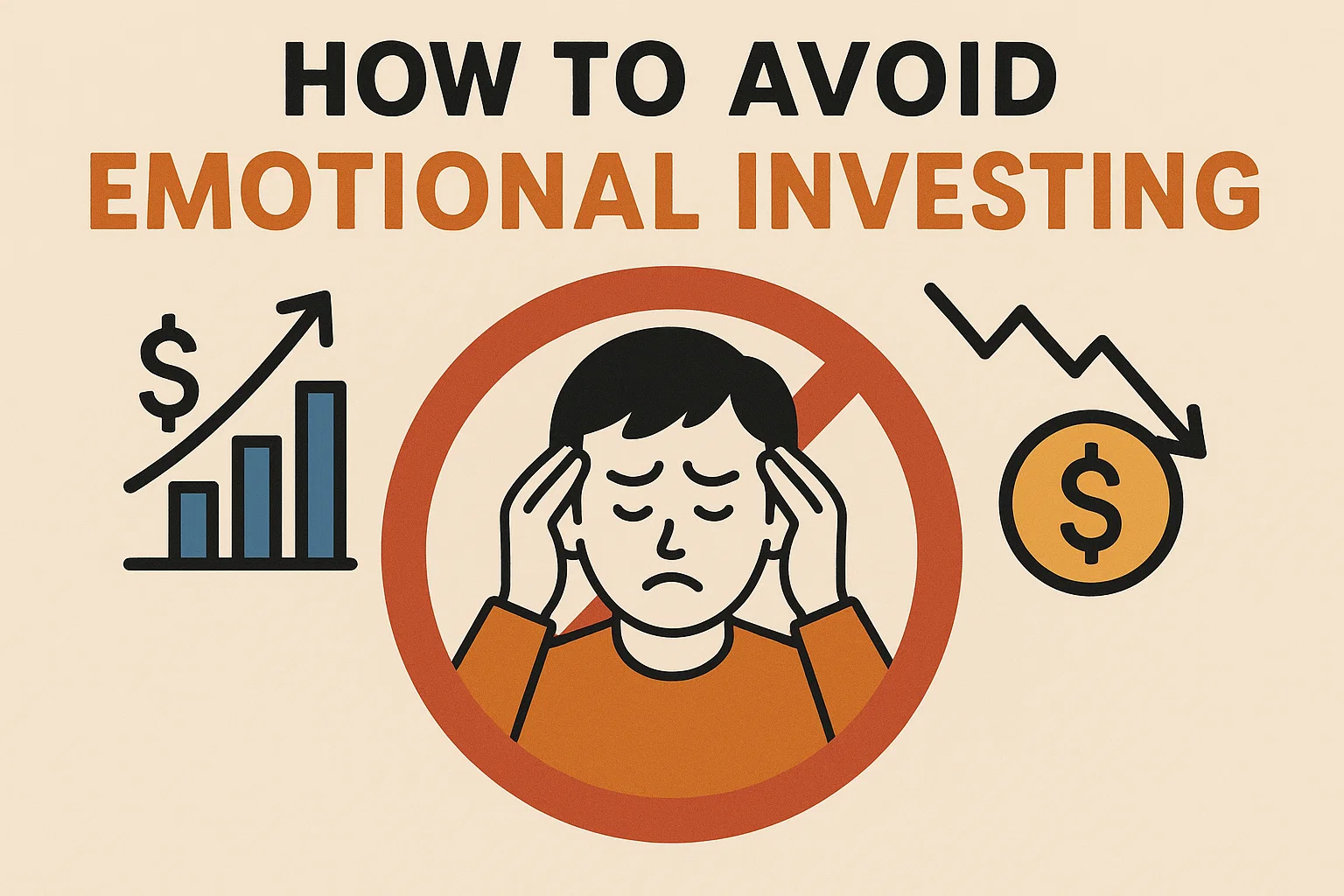
Do you panic sell during crashes or get FOMO during bull runs? You’re not alone. Mastering how to avoid emotional investing is crucial for long-term financial success. Emotional decisions often lead to losses, missed opportunities, and portfolio instability.
Let’s explore how you can take control of your investing emotions with practical, research-backed methods.
🔐 Why Emotional Investing Is Dangerous
Emotional investing leads to:
-
Panic selling in bear markets 🐻
-
Overbuying in bull runs 🐂
-
Holding losers too long out of hope
-
Chasing hype without analysis
All of these actions hurt your returns, consistency, and confidence.
🧩 9 Proven Strategies to Avoid Emotional Investing
1. 📝 Set Clear Goals
Define your financial goals (retirement, house, kids’ education) and align your investments accordingly. Purpose reduces panic.
2. 🧠 Know Your Risk Tolerance
If a 10% drop makes you anxious, your asset allocation might be too aggressive. Match your investments to your risk appetite.
3. 📅 Stick to a Strategy (SIP, DCA, Value Investing)
Automated systems like SIP (Systematic Investment Plan) or Dollar-Cost Averaging keep emotions out of the equation.
4. ⛔ Don’t Check Portfolio Daily
Frequent checking leads to overreaction. Limit it to once a month or during review periods.
5. 📉 Accept Volatility as Normal
Markets fluctuate. Accept it. Train your brain to see dips as opportunities, not threats.
6. 💬 Avoid Financial Gossip
Telegram tips, social media hype, or relatives’ “hot stock” advice? Most of it is noise. Rely on fundamental or technical analysis.
7. 🛑 Stop Timing the Market
Trying to buy the dip or sell the peak rarely works. Instead, invest consistently regardless of market mood.
8. 🎯 Focus on Long-Term Returns
History shows markets recover. Think in 5–10 year horizons, not 5–10 minute charts.
9. 🧘♀️ Train Your Mindset
Practice patience, mindfulness, and financial discipline. Wealth-building is a mental game first.
🔗 Useful Links – bit2050.com
🌐 Resources
❓ FAQ – How to Avoid Emotional Investing
Q1: Is emotional investing always bad?
Not always, but decisions driven purely by fear or greed usually lead to poor returns.
Q2: What if I feel panic during market crashes?
Stop. Breathe. Don’t act on impulse. Review your goals and only rebalance if needed.
Q3: Can SIPs really help with emotional investing?
Yes. SIPs remove the decision-making process, helping you stay disciplined and consistent.
Q4: Should I consult a financial advisor?
If emotions often control your investing, a certified advisor can provide objective guidance.
🧠 Final Thoughts
Understanding how to avoid emotional investing is one of the most powerful skills in personal finance. By mastering your mindset, you build not just wealth — but peace of mind.
Start investing like a pro — with logic, not emotion — only on bit2050.com.


