
🚨 How to Avoid Rug Pulls in Crypto: 9 Proven Tips to Stay Safe in 2025
With thousands of tokens launching every month, rug pulls remain one of the most devastating crypto scams. In a rug pull, developers drain liquidity or abandon a project after luring in investors.
But you can protect yourself. Here’s how to avoid rug pulls in crypto using 9 proven tips, curated by bit2050.com.
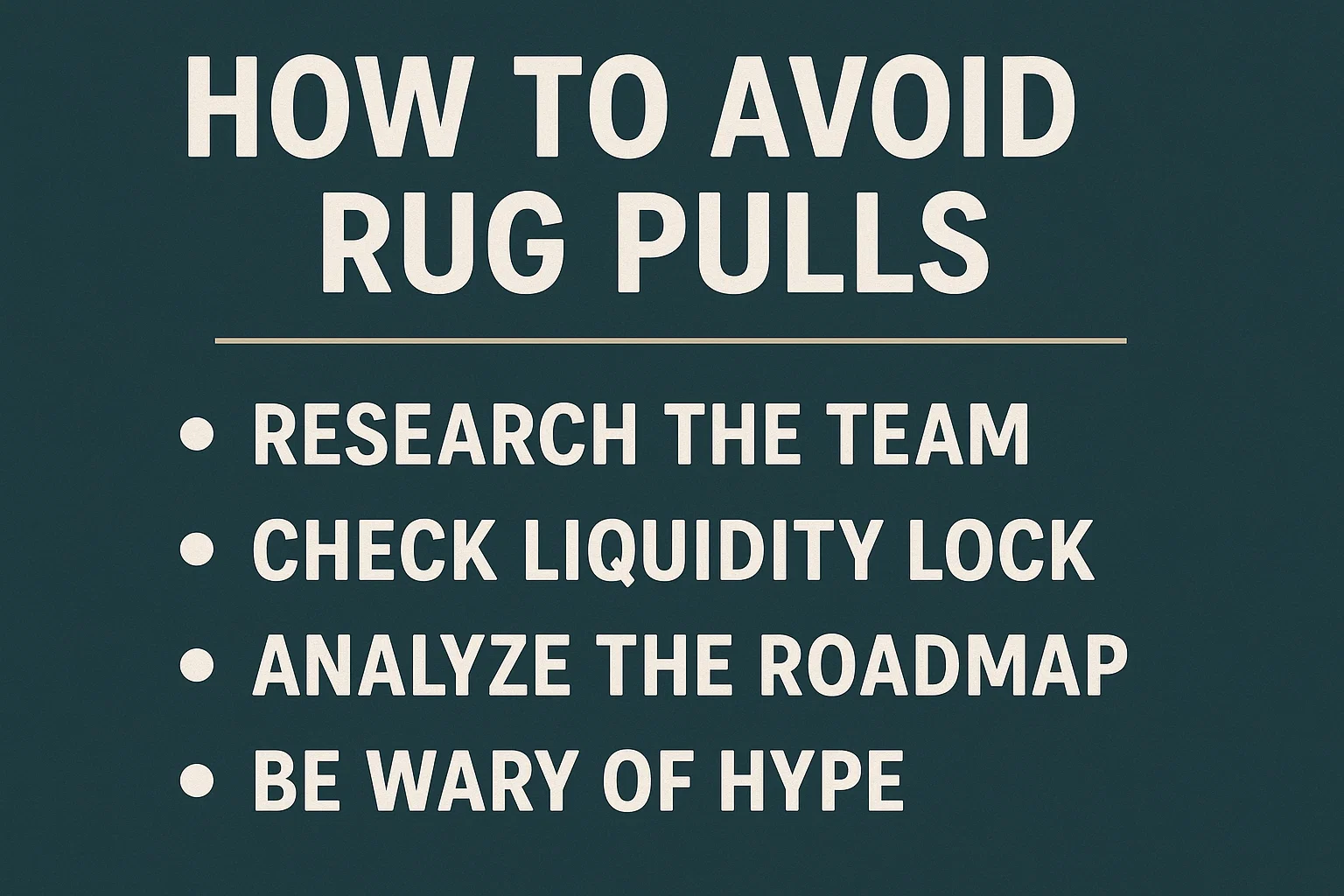
1. 🧑💻 Research the Team
Is the team doxxed (publicly identified)?
-
Check their LinkedIn, GitHub, or Twitter
-
Anonymous teams = higher rug pull risk
Red flag: No background, fake photos, or no social proof.
2. 🔍 Read the Whitepaper
Legit projects have clear roadmaps, tokenomics, and long-term plans.
Scam tokens usually have vague, copy-pasted whitepapers or unrealistic promises.
3. 🛠️ Verify Smart Contract Audit
Has the smart contract been audited by a trusted firm (e.g., CertiK, Hacken)?
If not, any backdoor function could allow devs to rug pull at any moment.
4. 💰 Examine Liquidity Lock
A key metric:
-
Has the liquidity been locked (e.g., via Unicrypt, PinkLock)?
-
For how long?
Unlocked liquidity = risk of instant rug pull.
5. 📊 Check Token Distribution
Beware of:
-
Huge percentage owned by dev wallets
-
Low liquidity vs. market cap
Use tools like DexTools.io or TokenSniffer
6. 📈 Analyze Price & Volume Spikes
Is there a sudden spike in volume and price followed by silence?
This could indicate pump-and-dump activity or a setup for a rug.
7. 👥 Join the Community
Active Telegram, Discord, or Twitter communities can reveal red flags:
-
Are devs responsive?
-
Is the chat filled with bots or hype without substance?
8. ⛓️ Test Small Transactions
If you’re unsure, do a small buy and sell test.
Some scam tokens block selling or charge 99% fees.
9. 🚨 Use Rug Pull Detection Tools
Use scanners to assess risk scores:
-
TokenSniffer
-
RugDoc
-
GoPlusLabs
🧠 Useful Links
📚 Resources
❓ FAQ – How to Avoid Rug Pulls
Q1: What is a rug pull in crypto?
A: A rug pull is a scam where developers drain the liquidity or abandon a project after collecting investor funds.
Q2: Can a token with high volume still be a rug pull?
A: Yes. Volume alone isn’t a sign of safety. Examine liquidity locks, contract audits, and team transparency.
Q3: How do I check if liquidity is locked?
A: Use platforms like Unicrypt or search on Etherscan/BSCScan for LP lock transactions.
Q4: What is a honeypot in crypto?
A: A honeypot is a smart contract trap where you can buy but cannot sell the token—another scam tactic.
Q5: Is KYC a guarantee against rug pulls?
A: No, but KYC adds a layer of accountability. Combine it with contract audits and tokenomics checks.
✅ Final Thoughts
In 2025, rug pulls may evolve—but so can your defenses. Use this checklist every time you evaluate a new token or DeFi project. Protect your funds, and stay smart.
Visit bit2050.com for more guides on crypto safety, investing strategies, and DeFi analysis.