

🧩 Introduction
Drowning in multiple EMIs or credit card bills? You’re not alone. In 2025, many Indians are turning to debt consolidation as a strategic way to simplify loan repayment, reduce interest costs, and regain financial peace of mind.
In this guide from bit2050.com, we break down how to consolidate debt step-by-step, explore smart tools and options, and answer FAQs to help you make informed financial decisions.
📌 What Is Debt Consolidation?
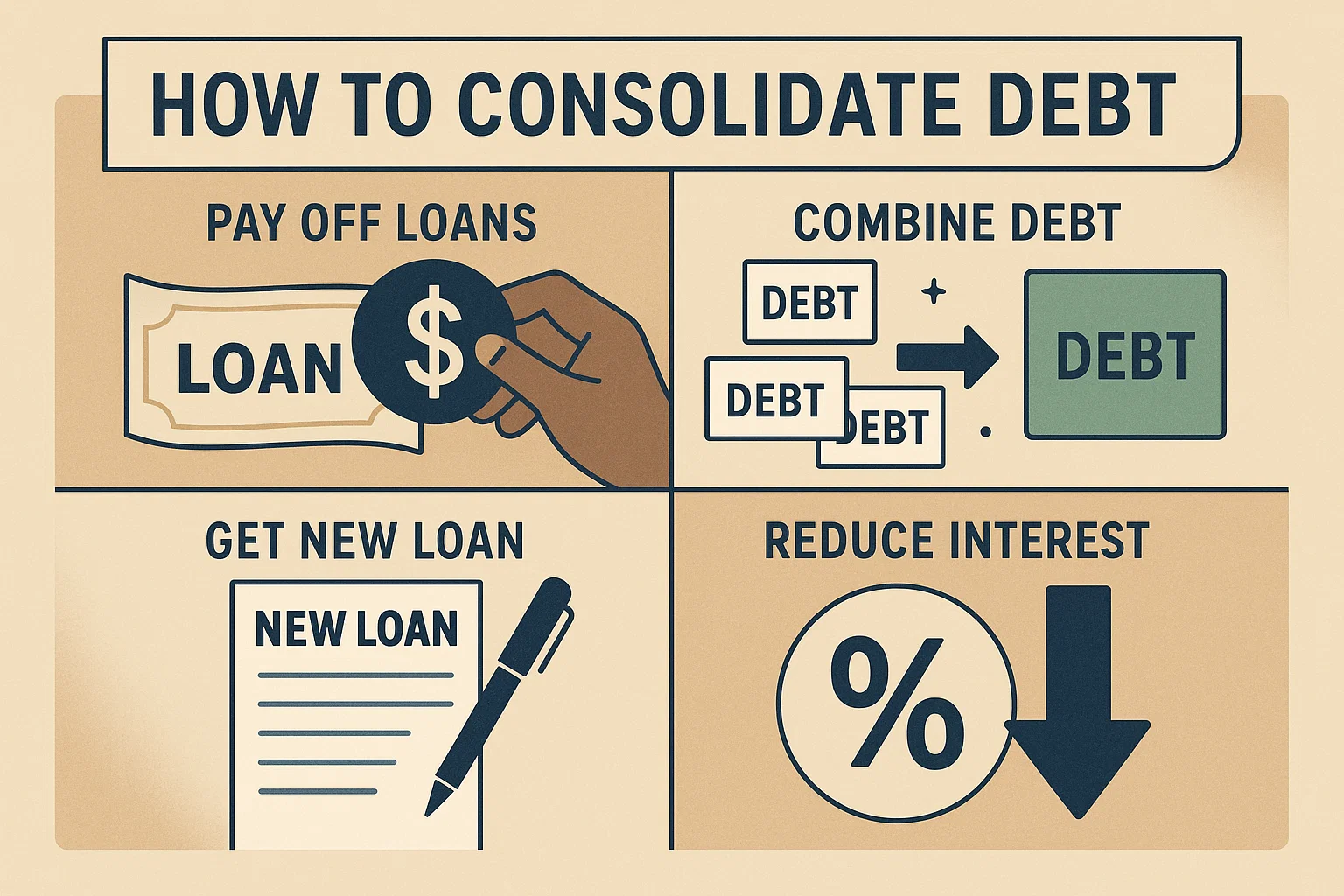
Debt consolidation is the process of combining multiple debts into one single loan — typically with a lower interest rate and a longer repayment period. It helps you:
-
Simplify EMI payments
-
Reduce interest burden
-
Avoid late fees
-
Improve your credit score over time
🧠 7 Smart Ways to Consolidate Debt in 2025
1. 🏦 Personal Loan for Debt Consolidation
Apply for a low-interest personal loan and use it to pay off all other high-interest debts like credit cards or payday loans.
2. 💳 Balance Transfer Credit Card
Transfer all outstanding credit card balances to a 0% APR credit card (introductory offer) to save on interest for 6–12 months.
3. 🏠 Loan Against Property
Use your house or property as collateral to secure a lower-rate secured consolidation loan.
4. 🏢 Employer Loan or Advance
Some companies offer interest-free or low-interest loans to help employees manage debt better.
5. 🧾 Gold Loan or PPF Collateral Loan
Use gold or Public Provident Fund (PPF) as collateral to get cheaper loans and clear off high-interest debts.
6. 📊 Credit Counseling Services
Non-profit organizations and certified financial planners can help negotiate and restructure your debt.
7. 🔁 Combine EMI into One
Use your bank’s EMI merger facility to combine personal loan + credit card dues into a single EMI.
📈 Pros and Cons of Debt Consolidation
| Pros | Cons |
|---|---|
| Easier to manage one EMI | Might extend repayment period |
| Lower interest costs | May require good credit score |
| Reduces stress | Some loans need collateral |
✅ When Is the Right Time to Consolidate Debt?
-
You’re paying high interest on credit cards
-
You’re missing EMIs or struggling with repayment
-
Your credit score is declining
-
You want to avoid bankruptcy
🔗 Useful Links – bit2050.com
🌐 Resources
❓ Frequently Asked Questions (FAQ)
Q1. Will debt consolidation hurt my credit score?
Initially, it may dip due to a hard inquiry, but over time, consistent payments can improve your credit score.
Q2. Is it better to use a personal loan or a credit card balance transfer?
If your debt is high and scattered, a personal loan may offer a better fixed interest rate. For short-term repayment, 0% balance transfer cards can work.
Q3. Do I need a high credit score to consolidate debt?
It helps, especially for unsecured personal loans. But even with a moderate score, options like gold loans or employer loans can work.
Q4. Is debt consolidation the same as a debt settlement?
No. Debt consolidation repays the full debt, while debt settlement negotiates to pay less than owed, which negatively affects credit.


