
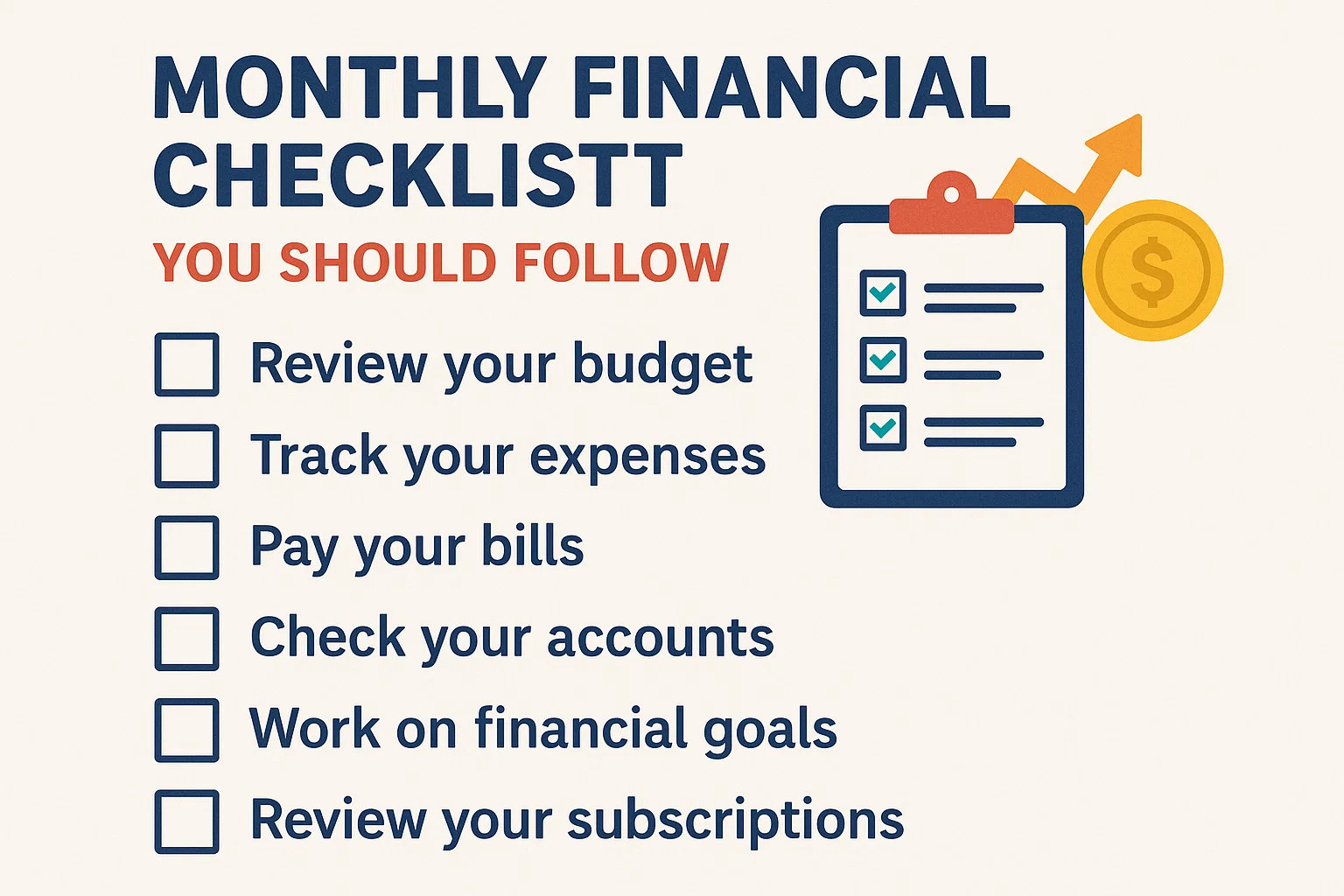

📆 Monthly Financial Checklist – 11 Powerful Habits for a Stress-Free Money Life
Money success isn’t about making one perfect decision — it’s about doing the right small things consistently.
That’s where a monthly financial checklist can transform your finances.
Follow these 11 essential money habits every month to gain clarity, control, and confidence.
✅ 1. Review Your Income
Check all income sources:
-
Salary
-
Freelance or side hustle income
-
Passive sources like rent or dividends
Why? It helps you plan spending and saving targets accurately.
✅ 2. Track Your Expenses
Use tools like:
-
Excel or Google Sheets
-
Expense-tracking apps like Walnut or Money Manager
-
Bank statements
Tip: Categorize expenses (needs, wants, goals).
✅ 3. Update Your Budget
Compare actual expenses vs. budget goals.
Adjust where necessary. Keep it realistic, not restrictive.
✅ 4. Pay Off Credit Card Dues
Avoid late fees and interest.
If you can’t pay in full, try to pay more than the minimum.
✅ 5. Top Up Your Emergency Fund
Set a fixed % or amount every month to build toward 6–12 months of expenses.
✅ 6. Track Investment Portfolio
Review:
-
SIPs
-
Mutual funds
-
Stocks
-
Crypto
Rebalance if any one asset has drifted too far from your target allocation.
✅ 7. Check Upcoming Bills & EMIs
Plan for:
-
Credit card payment dates
-
Loan EMIs
-
Utility bills
Set auto-debit or reminders to avoid penalties.
✅ 8. Save for Upcoming Goals
This could include:
-
Travel
-
Festivals
-
School fees
-
Emergency purchases
Label your savings buckets clearly.
✅ 9. Review Financial Goals
Are you closer to:
-
Your savings target
-
Debt-free date
-
Emergency corpus
-
Retirement plan?
Celebrate small wins every month!
✅ 10. Check Credit Score
Use sites like:
Monitoring monthly helps spot fraud early.
✅ 11. Learn One New Financial Concept
Every month, read:
-
1 blog from bit2050.com 😉
-
1 money book summary
-
1 personal finance podcast
Knowledge = long-term power.
🔗 Useful Links – bit2050.com
🌐 Resources
❓ FAQ – Monthly Financial Checklist
Q1: How much time should a monthly review take?
A: Ideally, 60–90 minutes is enough for a complete financial review.
Q2: What if my income is irregular?
A: Use an average of the last 3–6 months to set variable budgets and prioritize essentials.
Q3: Is it okay to skip investing some months?
A: Life happens. But make sure to resume your SIP or investing habit the following month.
Q4: Should I track expenses manually or with an app?
A: Whatever helps you stay consistent! Apps offer speed; manual methods offer deeper awareness.
Q5: What’s the #1 habit in this checklist?
A: Tracking expenses and reviewing goals — they give you the financial GPS you need.
💬 Final Thoughts
Your finances won’t change overnight — but with a monthly financial checklist, you build the habits that change your life.
Start small. Stay consistent. And let bit2050.com guide you toward lasting financial peace in 2025.


