

🎯 How to Set SMART Financial Goals – 5 Proven Steps for 2025 Success
Want to take control of your finances this year? It starts with setting SMART financial goals — the kind that are clear, trackable, and achievable.
In this guide, we’ll walk you through 5 actionable steps to help you create and stick to financial goals using the SMART method.
📘 What Are SMART Financial Goals?
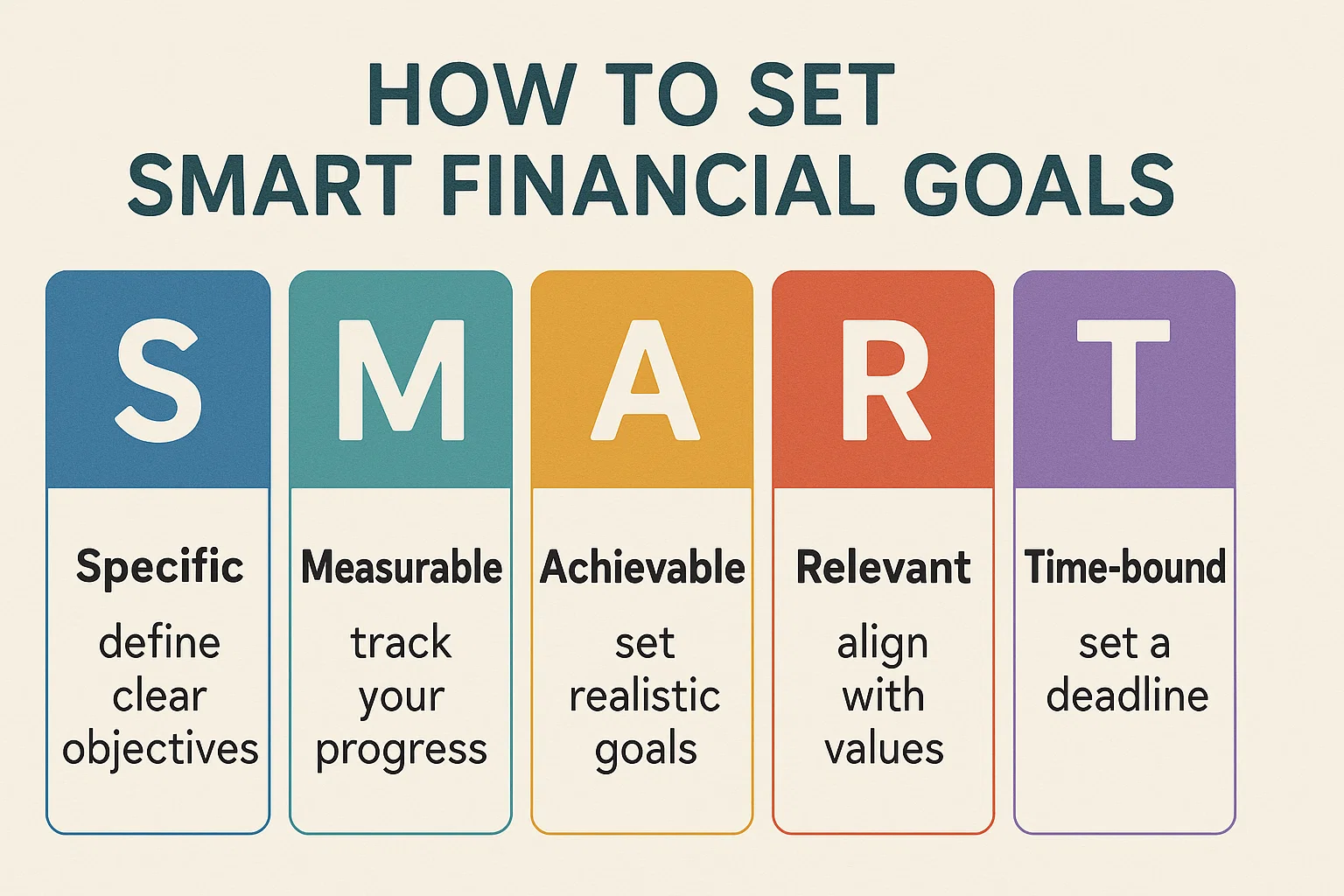
SMART is an acronym that helps make your goals:
-
Specific
-
Measurable
-
Achievable
-
Relevant
-
Time-bound
This framework turns vague money dreams into clear plans. For example, “I want to save money” becomes “I will save ₹10,000 in 3 months for emergency funds.”
🪜 Step 1: Be Specific
Don’t say: “I want to be rich.”
Say instead: “I want to pay off ₹50,000 in credit card debt.”
👉 Clarity helps you create a plan.
📏 Step 2: Make It Measurable
Set an amount and deadline.
For example:
“Save ₹1,000 per month for 12 months = ₹12,000/year”
Tracking progress motivates you to stay on track.
🛠️ Step 3: Keep It Achievable
Set goals within reach based on your income and expenses.
For instance, if you earn ₹25,000/month, saving ₹20,000 is unrealistic. Aim for 10–20% of your income for savings.
🔗 Step 4: Ensure Relevance
Your goal should align with your life priorities:
-
Emergency savings
-
Buying a home
-
Retirement
-
Education
Ask: “Will this goal improve my long-term financial health?”
⏰ Step 5: Add a Time Frame
A deadline creates urgency.
Examples:
-
Pay off loan in 6 months
-
Save for a laptop in 3 months
-
Build ₹1L emergency fund in 1 year
✨ SMART Goal Examples
| Goal | SMART Version |
|---|---|
| Save more money | Save ₹5,000/month for 6 months |
| Reduce debt | Pay off ₹20,000 loan in 4 months |
| Buy a bike | Save ₹50,000 in 5 months |
🔗 Useful Links – bit2050.com
🌐 Resources
❓ FAQ – SMART Financial Goals
Q1: Can SMART goals help me get out of debt?
A: Yes, they break your debt payoff into measurable, time-bound steps.
Q2: Are SMART goals only for saving?
A: No. You can use them for saving, spending, investing, or debt reduction.
Q3: How do I track progress?
A: Use a spreadsheet, mobile app, or planner to record milestones weekly or monthly.
Q4: What if I fail to meet my goal?
A: Reassess your numbers and timeline. Make it more realistic and keep going.
Q5: Can I set multiple SMART goals?
A: Absolutely. Prioritize them by urgency and work on 1–2 at a time.
🧾 Final Thoughts
Setting SMART financial goals can change the way you manage money forever. With focus and discipline, you’ll stop guessing and start growing.
Ready to level up your money game? Start your journey with more guides and tools at bit2050.com.


