
🌉 Cross-Chain Bridges and Why They Matter – 7 Key Benefits for Crypto in 2025
As crypto matures, different blockchains like Ethereum, BNB Chain, and Solana have emerged — each with unique strengths. But they often operate in silos.
This is where cross-chain bridges come in. If you’re wondering cross-chain bridges and why they matter, this guide explains how they fuel the multi-chain future of crypto.
🔗 What Are Cross-Chain Bridges?
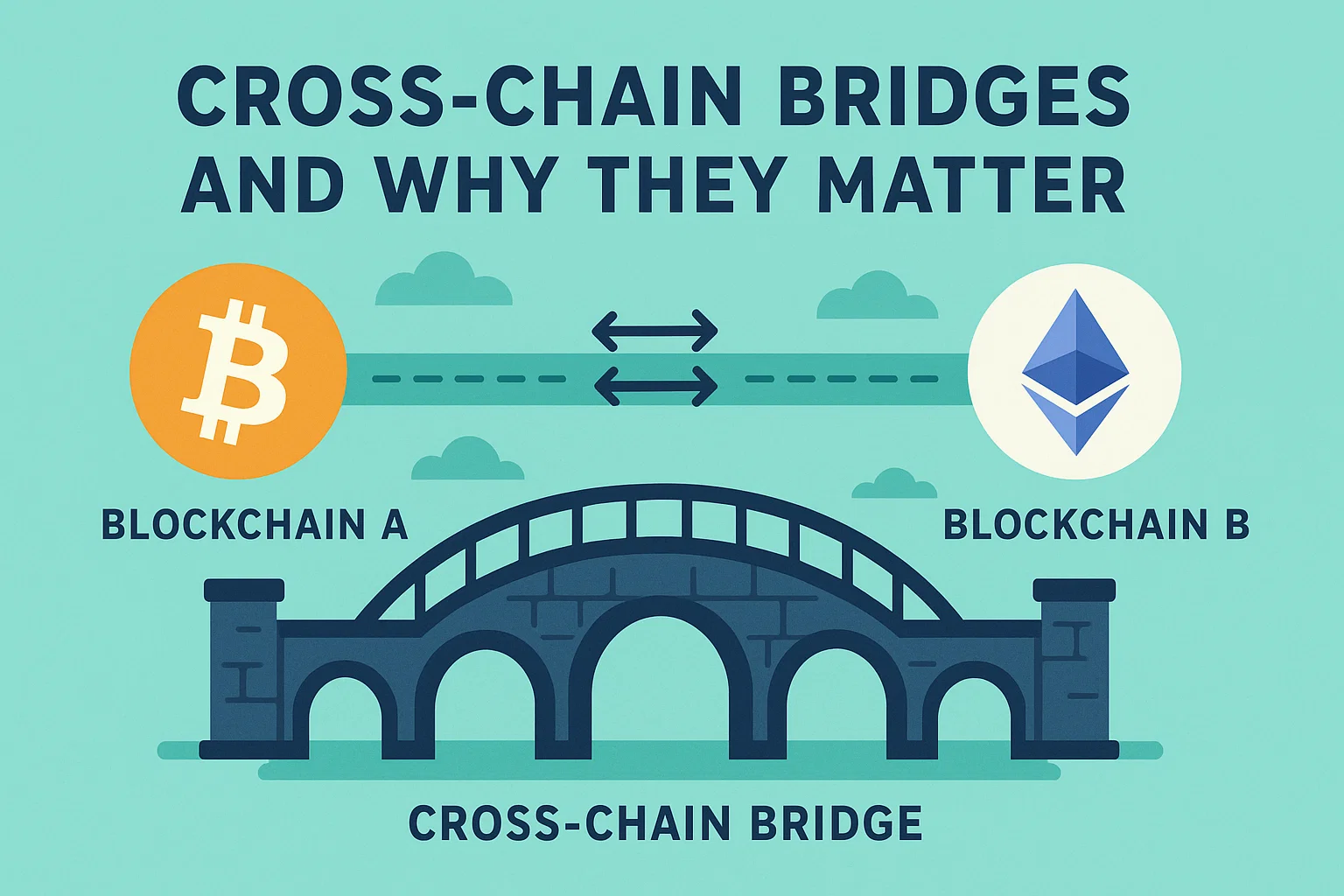
A cross-chain bridge is a protocol that allows users to move assets and data between different blockchain networks.
Imagine transferring ETH from Ethereum to Avalanche or moving USDT from Polygon to Arbitrum — bridges make this possible.
🧠 Why Cross-Chain Bridges Matter: 7 Benefits
1. 🌐 Interoperability
They connect isolated blockchain ecosystems, enabling communication and collaboration.
2. 💰 Liquidity Expansion
Bridges allow capital to flow freely between chains, increasing overall liquidity in DeFi.
3. 🚀 User Flexibility
Users can move assets to chains with lower gas fees or faster speeds depending on their needs.
4. 🛠️ Developer Freedom
Developers can build dApps that interact with multiple blockchains, not just one.
5. 🔒 Security Layers
Many bridges use wrapped tokens or lock-and-mint mechanisms to ensure assets stay safe.
6. 🌉 Onboarding New Chains
New blockchains can connect to existing liquidity by bridging tokens like ETH or USDC.
7. 🧩 Powering the Multi-Chain Future
Cross-chain bridges are the backbone of Web3, enabling dApps to operate across ecosystems.
🏗️ How Do Cross-Chain Bridges Work?
Most bridges operate in 2 ways:
-
Lock-and-Mint: Lock tokens on Chain A, mint equivalent tokens on Chain B (e.g., wETH on BNB Chain)
-
Burn-and-Release: Burn wrapped tokens on the destination chain, then release originals back on the source chain
Smart contracts, oracles, and validators ensure this process is secure.
⚠️ Risks of Using Cross-Chain Bridges
While powerful, bridges are high-value attack targets. Notable hacks like:
-
🌉 Ronin Bridge Hack (2022) – $625 million
-
🌉 Wormhole Hack (2022) – $325 million
Tips to stay safe:
-
Use audited bridges
-
Avoid new, unaudited platforms
-
Never approve unknown smart contracts
🔗 Useful Links – bit2050.com
🌐 Resources
❓ FAQ – Cross-Chain Bridges and Why They Matter
Q1: Are cross-chain bridges safe?
A: Reputable bridges are safe, but they are often targets of exploits. Always verify audits and use trusted platforms.
Q2: Do bridges charge fees?
A: Yes, usually a small fee for gas and service. Some also include slippage or bridge tax.
Q3: What are wrapped tokens?
A: Tokens like wBTC or wETH are wrapped versions of native assets that exist on other blockchains.
Q4: Can I bridge NFTs too?
A: Yes! NFT bridges allow digital assets to move across chains, though support is still limited.
Q5: Which is the best bridge?
A: Bridges like Wormhole, Stargate, and Synapse Protocol are among the most trusted in the ecosystem.
✅ Final Thoughts
Now you understand cross-chain bridges and why they matter — they’re not just a convenience; they’re a necessity for blockchain’s future. These bridges unlock scalability, usability, and collaboration across the Web3 world.
Explore more innovations at bit2050.com — your hub for cutting-edge crypto insights.