
🔐 Introduction: The Shift to Decentralized Identity
Traditional digital identity systems are broken — passwords get hacked, data is siloed, and privacy is compromised. That’s where decentralized identity comes in.
At bit2050.com, we break down how decentralized identity works and why it’s the future of secure digital interaction in the age of Web3.
🧾 What is Decentralized Identity?
Decentralized Identity (DID) is a new way of managing personal information online, giving users control over their own data.
Instead of relying on a central authority (like Google or Facebook), users create and manage their identities using blockchain-based systems. This is also known as self-sovereign identity.
🔍 How Does Decentralized Identity Work?
Here’s how decentralized identity works step-by-step:
-
Create a Decentralized Identifier (DID):
A unique digital ID generated using blockchain technology. -
Store Your Identity Securely:
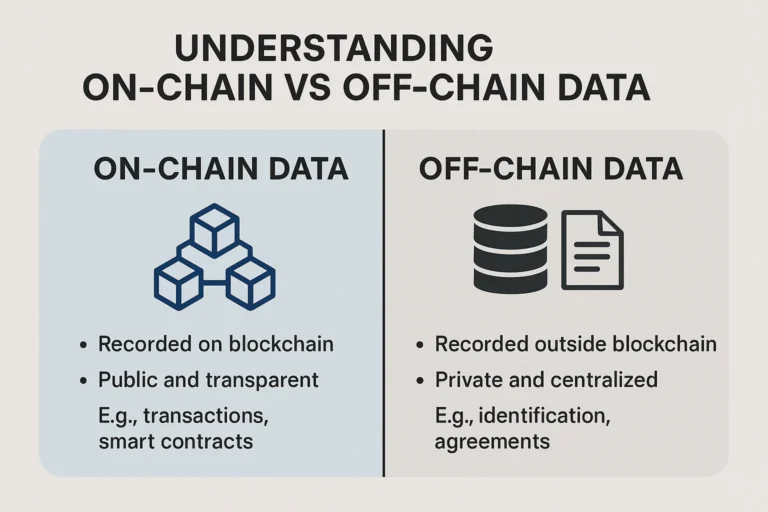
Data (like name, address, credentials) is stored in a digital wallet on your device, not on a centralized server. -
Verification through Blockchain:
Institutions or companies verify your credentials (e.g., university degree) and write proof to the blockchain. -
Selective Disclosure:
You can choose what data to share, with whom, and when, enhancing privacy and security.
✅ Key Benefits of Decentralized Identity
-
Ownership & Control: You own your data, not Facebook, not Google.
-
Privacy: Share only necessary information.
-
Security: No centralized database to hack.
-
Interoperability: Use your identity across platforms and borders.
-
Transparency: Every verification is recorded on an immutable ledger.
🛠️ Real-World Applications
-
Healthcare: Secure, portable health records.
-
Education: Verified digital degrees.
-
Finance: Streamlined KYC/AML without exposing sensitive info.
-
Travel: Fast and secure digital passports.
-
Social Media: Proof of identity without revealing personal details.
🆚 Centralized Identity vs Decentralized Identity
| Feature | Centralized Identity | Decentralized Identity |
|---|---|---|
| Data Control | Controlled by companies | Controlled by users |
| Storage Location | Central servers | User-owned digital wallets |
| Privacy | Often compromised | User-controlled and secure |
| Verification | Manual or through third parties | Blockchain-based, verifiable |
| Risk | Prone to hacking & data leaks | Resistant to tampering |
🌍 Why It Matters in Web3
In Web3, users demand privacy, trust, and control. Decentralized identity is a pillar of that future. It aligns with the ethos of Web3: user empowerment, decentralization, and transparency.
📌 Final Thoughts
Understanding how decentralized identity works is key to navigating the future of the internet. It’s not just a trend — it’s a necessary evolution in digital trust.
At bit2050.com, we continue to explore cutting-edge technologies that empower users and redefine online safety. Stay ahead of the curve with us!
❓FAQ: How Decentralized Identity Works
What is a decentralized identifier (DID)?
A DID is a unique string tied to a blockchain that represents your digital identity, allowing secure and private authentication without a central authority.
Is decentralized identity secure?
Yes. It uses blockchain’s cryptographic features to ensure data integrity and user-controlled access.
Can I use a decentralized identity today?
Yes. Platforms like Microsoft Entra, ION, and Sovrin already support decentralized identity systems.
How is DID different from traditional ID?
Traditional IDs rely on institutions for verification and storage. DID puts control into users’ hands and stores verification on blockchain networks.
Is decentralized identity the future?
Absolutely. As Web3 grows, decentralized identity is becoming essential for privacy, security, and seamless digital interaction.