
🥊 Avalanche vs Solana: 7 Key Comparisons to Decide Which is Better in 2025
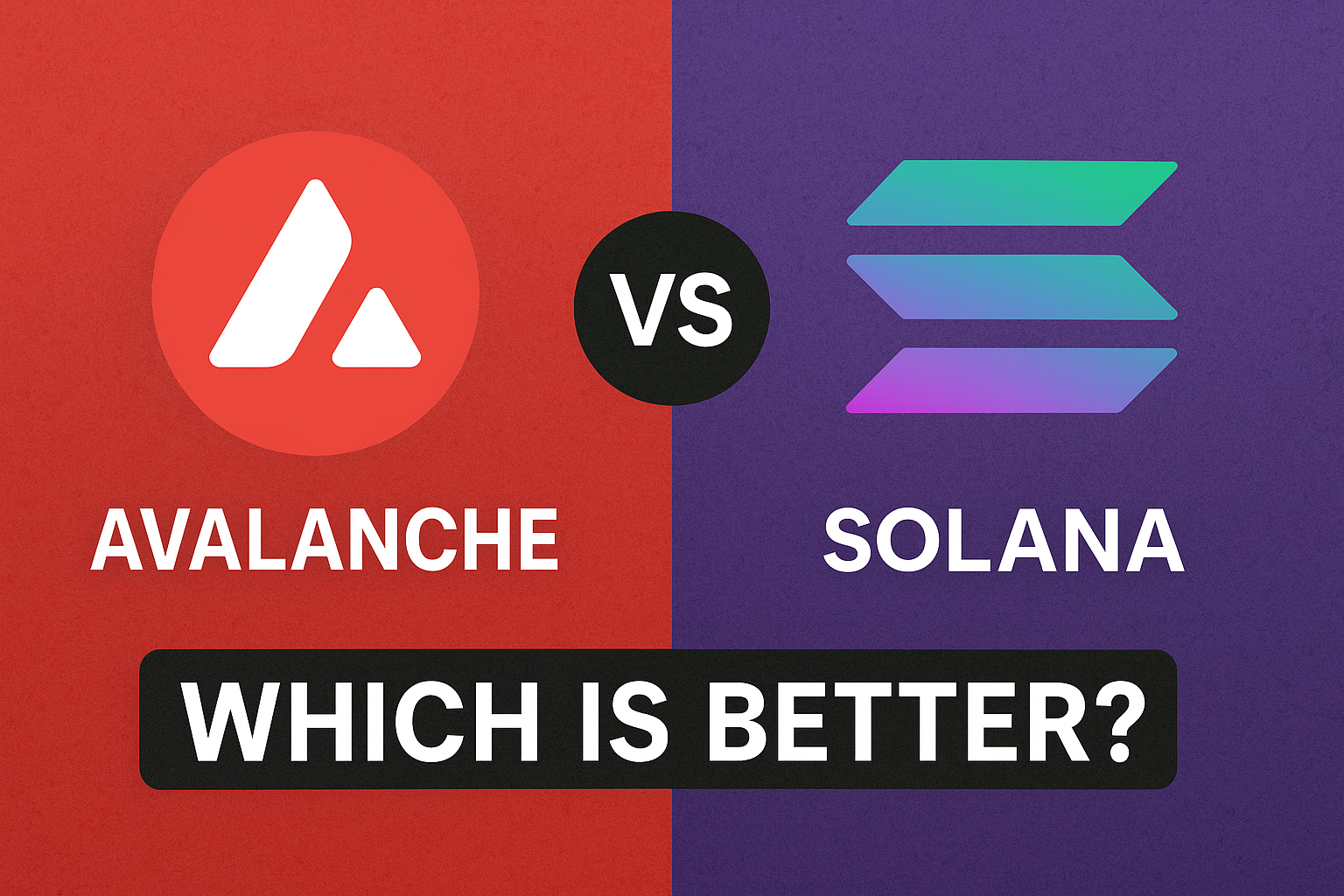
Avalanche vs Solana: Which is Better – In the rapidly evolving world of blockchain, Avalanche (AVAX) and Solana (SOL) have emerged as two of the most prominent Layer 1 smart contract platforms. Each promises high throughput, low fees, and scalability — but they take very different paths to achieve it.
At bit2050.com, we’ve analyzed both platforms in-depth. Here’s a detailed 7-point comparison to help you decide between Avalanche vs Solana — which is better in 2025?
⚔️ 1. Consensus Mechanism
-
Solana: Uses Proof of History (PoH) + Proof of Stake
-
Avalanche: Uses the Avalanche Consensus Protocol, a unique DAG-based PoS system
✅ Winner: Avalanche – Offers sub-second finality and higher energy efficiency
⚡ 2. Transaction Speed & Scalability
-
Solana: ~65,000 TPS (theoretical), real-world closer to 3,000–5,000 TPS
-
Avalanche: ~4,500 TPS per subnet, scalable via multiple customizable subnets
✅ Winner: Solana – In practice, Solana still has faster single-chain processing
💸 3. Transaction Fees
-
Solana: Extremely low (~$0.00025 per transaction)
-
Avalanche: Low, but typically higher than Solana (~$0.01 average)
✅ Winner: Solana – Cheaper and more microtransaction-friendly
🛠️ 4. Developer Ecosystem & dApp Support
-
Solana: Thriving NFT/gaming ecosystem (Magic Eden, Stepn, Phantom)
-
Avalanche: Strong DeFi support and subnet deployments (Trader Joe, Core Wallet, GameFi)
✅ Winner: Tie – Solana leads in NFTs, Avalanche shines in custom subnets & DeFi
🧱 5. Network Structure & Flexibility
-
Solana: One global state, focused on performance
-
Avalanche: Multiple customizable blockchains via subnets, ideal for enterprises and games
✅ Winner: Avalanche – Greater flexibility and modularity for specific use cases
🔐 6. Decentralization & Validator Count
-
Solana: ~2,000 validators, but high hardware requirements raise centralization concerns
-
Avalanche: ~1,500 validators, low hardware entry point, more democratic participation
✅ Winner: Avalanche – More accessible validator model, better decentralization potential
💣 7. Downtime & Network Stability
-
Solana: Faced several major outages in 2021–2023
-
Avalanche: More stable, with no major breakdowns
✅ Winner: Avalanche – Proven to be more reliable and robust under pressure
🧠 Summary Table – Avalanche vs Solana (2025)
| Feature | Avalanche (AVAX) | Solana (SOL) | Verdict |
|---|---|---|---|
| Consensus | Avalanche Protocol | Proof of History + PoS | Avalanche |
| TPS (real-world) | ~4,500 TPS per subnet | ~3,000–5,000 TPS | Solana |
| Transaction Fees | ~$0.01 | ~$0.00025 | Solana |
| NFT & DeFi Ecosystem | DeFi/Subnets Strong | NFT/Gaming Strong | Tie |
| Validator Access | More Inclusive | Higher Hardware Barrier | Avalanche |
| Downtime History | Minimal | Frequent in Past | Avalanche |
🔗 Useful Links (bit2050.com)
❓ FAQ – Avalanche vs Solana: Which is Better?
Q1: Is Avalanche more secure than Solana?
A: Both offer strong security, but Avalanche’s subnet architecture and lower hardware requirements may provide more decentralization.
Q2: Which is better for NFTs?
A: Solana currently dominates the NFT scene with platforms like Magic Eden and Phantom Wallet.
Q3: Can Avalanche scale better than Solana?
A: Avalanche’s custom subnets allow for better horizontal scalability and use-case-specific networks.
Q4: Which has more downtime—Avalanche or Solana?
A: Solana has experienced multiple outages, while Avalanche has had a more stable record to date.
Q5: Which coin is a better investment in 2025?
A: Depends on your risk profile—Solana for mainstream apps and NFTs, Avalanche for enterprise and DeFi innovation.
✅ Final Thoughts
So, Avalanche vs Solana: which is better? The answer depends on your priorities:
-
For speed and low fees, Solana wins.
-
For customization, stability, and decentralization, Avalanche leads.
In 2025, both are thriving ecosystems with unique advantages. A diversified strategy may be the smartest choice.
Explore more crypto comparisons and blockchain trends at bit2050.com — your #1 source for Web3 insights and future-ready crypto guides.