

📌 Introduction
Have you ever bought something just to feel better — and regretted it later?
Emotional spending is more common than you think, especially in times of stress, boredom, or sadness. But the good news is: you can learn how to stop emotional spending with a few smart strategies.
Let’s break down exactly how to regain control of your money and emotions.
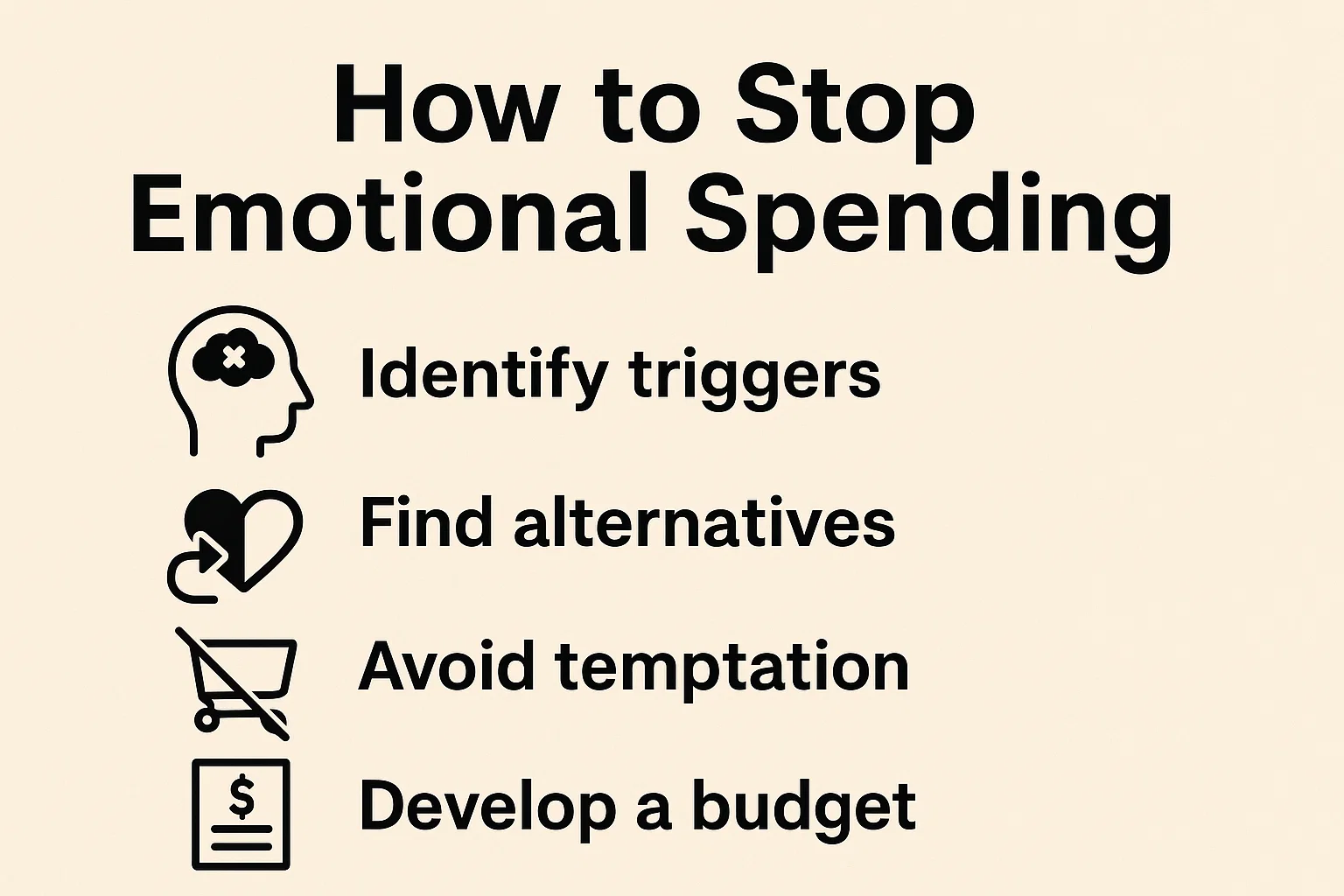
🧠 How to Stop Emotional Spending – 9 Proven Tips
1. 📝 Track Your Triggers
Keep a spending journal to identify emotional patterns:
-
Are you buying when sad, bored, or anxious?
-
Do you overspend after arguments or stressful days?
Knowing the trigger is the first step to changing the habit.
2. 🚫 Wait 24 Hours Before Big Purchases
Use the “24-Hour Rule” before buying anything non-essential.
This delay helps separate emotions from decisions.
3. 💡 Set Clear Financial Goals
Having solid money goals helps redirect emotional energy into motivation:
-
Save ₹1 lakh in 12 months
-
Clear debt in 6 months
-
Invest ₹5,000/month in SIPs
4. 🧺 Unsubscribe from Temptation
Unfollow online stores, unsubscribe from email promos, and delete shopping apps. Out of sight = out of impulse.
5. 📊 Build a Realistic Budget
Give yourself a “fun spending” category (5–10%).
This way you enjoy life without guilt and without overspending.
6. 🧘 Practice Mindfulness Before Buying
Pause and ask:
-
“Do I really need this?”
-
“What emotion am I trying to fix right now?”
-
“Will this matter in 24 hours?”
7. 💸 Use Cash or Prepaid Cards
Studies show people spend less when using cash over cards.
Try switching to cash for discretionary expenses.
8. 🤝 Find an Accountability Partner
Talk to a friend, partner, or even a finance coach who can support your no-spend goals.
9. 🔄 Replace the Habit
Instead of shopping, try:
-
Going for a walk
-
Calling a friend
-
Journaling or meditating
-
Listening to music or podcasts
🔗 Useful Links – bit2050.com
🌐 Resources
❓ FAQ – How to Stop Emotional Spending
Q1. What is emotional spending?
It’s when you buy things to cope with emotions like sadness, boredom, or stress — rather than genuine need.
Q2. Can I still shop if I’m trying to stop emotional spending?
Yes. The goal is mindful shopping, not total restriction. Include a small, guilt-free budget for fun.
Q3. Is emotional spending a sign of deeper issues?
Sometimes. Chronic emotional spending may indicate stress, anxiety, or even depression, and talking to a therapist could help.
Q4. How long does it take to stop the habit?
You may start seeing change in 2–4 weeks with consistent effort, journaling, and goal-setting.
Q5. Are there apps that help track emotional spending?
Yes. Try Mint, ET Money, or You Need a Budget (YNAB) to log expenses and mood notes.
✅ Final Thoughts
Learning how to stop emotional spending is one of the most powerful financial habits you can develop. It not only saves you money but also helps build emotional resilience.
Start with one small step today — and trust that with consistency, change will follow.
For more money tips that help you stay in control, visit bit2050.com.


