
🔓 What is a 51% Attack in Crypto? 7 Shocking Facts You Need to Know
The security of blockchain technology lies in its decentralized nature. But what happens when one entity controls the majority of a network? That’s when a 51% attack becomes a major threat.
At bit2050.com, we break down what is a 51% attack in crypto, how it works, and why it’s one of the most dangerous vulnerabilities in blockchain networks — especially those using Proof of Work (PoW) consensus.
🔍 What is a 51% Attack in Crypto?
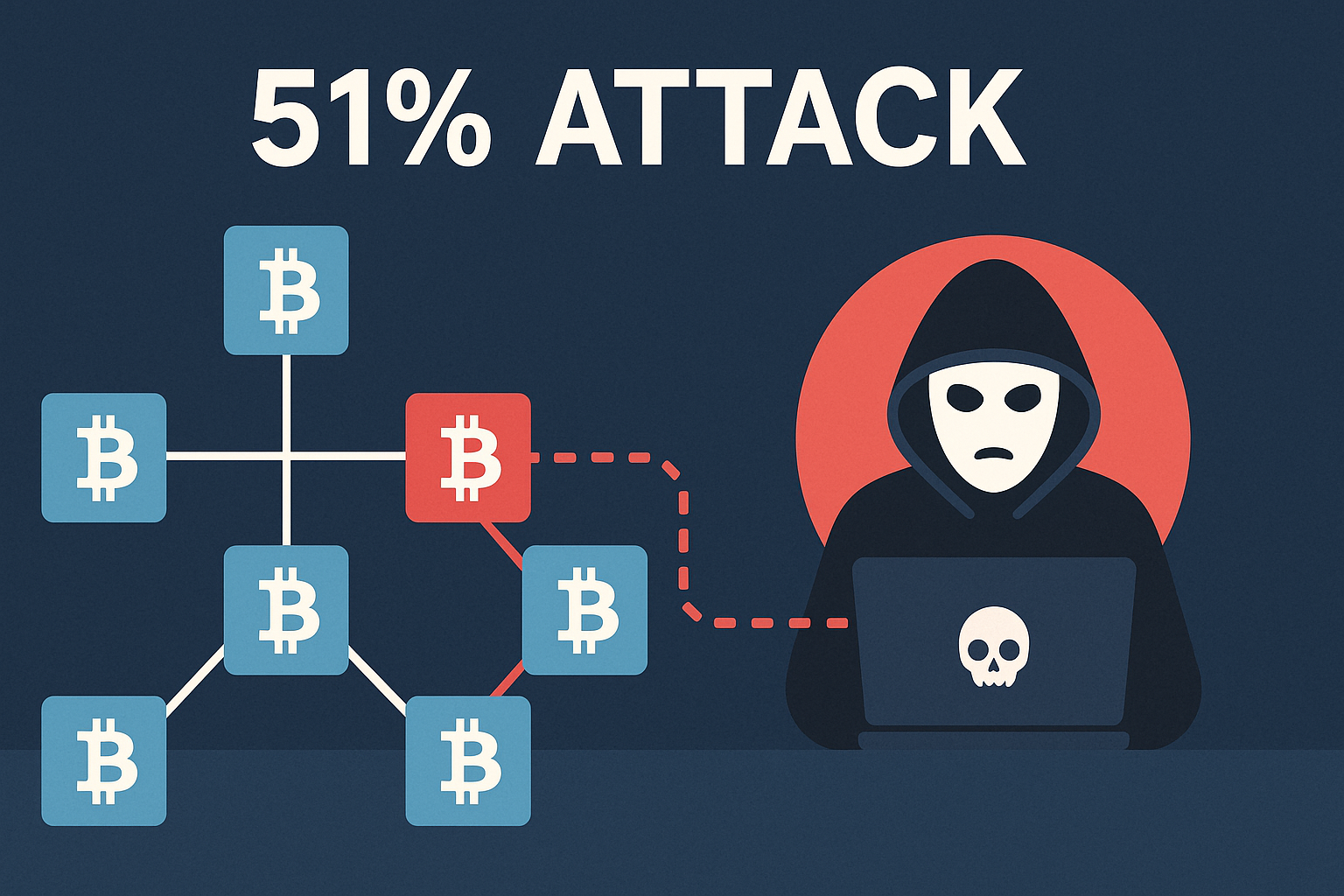
A 51% attack occurs when a single miner or group of miners controls over 50% of a blockchain network’s total hashing power (in PoW systems).
With this majority control, they can:
-
Manipulate the blockchain ledger
-
Reverse transactions (double-spending)
-
Halt new transactions from being confirmed
-
Prevent other miners from earning rewards
In simple terms: if one player controls the majority, they can rewrite history — at least temporarily.
⚠️ 7 Shocking Facts About 51% Attacks in Crypto
1. Even Decentralized Blockchains Can Be Attacked
While decentralization is a blockchain’s strength, smaller PoW chains with limited hash power are vulnerable.
✅ Bitcoin is secure due to massive hash power
❌ Smaller chains like Ethereum Classic and Bitcoin Gold have suffered 51% attacks
2. Double-Spending Is the Primary Threat
An attacker can reverse their own transactions, allowing them to:
-
Spend crypto on an exchange
-
Withdraw assets
-
Rewrite the chain to show it never happened
✅ This is known as double-spending, and it breaks the trustless system of blockchain.
3. Proof of Work Is More Susceptible Than Proof of Stake
In PoW:
-
You control the chain if you control the majority hash rate
In PoS:
-
You’d need to own or stake 51% of all tokens, which is much costlier and riskier
✅ PoS systems are generally more resistant to 51% attacks.
4. These Attacks Are Rare but Real
Famous 51% attack examples:
-
Ethereum Classic (ETC) – Attacked multiple times in 2019–2020
-
Bitcoin Gold (BTG) – Lost over $18M in 2018
-
Vertcoin (VTC) – Attacked in 2018 and 2019
✅ Each attack caused major trust damage and delistings from exchanges.
5. It’s Not Just About Money — It’s About Control
A successful 51% attack lets the attacker:
-
Disrupt consensus
-
Freeze or censor transactions
-
Undermine confidence in the network
✅ It’s less about stealing coins, more about breaking trust.
6. The Cost of a 51% Attack Is Publicly Trackable
Websites like Crypto51.app show:
-
Estimated cost per hour to attack various PoW chains
-
BTC: Over $1M/hour
-
ETC: As low as $5K/hour at its weakest
✅ The cheaper the chain to attack, the more dangerous it is.
7. Preventing 51% Attacks Requires Community Vigilance
Solutions include:
-
Increasing hash power
-
Switching to PoS (like Ethereum did)
-
Adding finality layers or checkpoints
-
Monitoring mining pools
✅ The community must stay alert to maintain decentralization and network health.
🧩 Useful Links (bit2050.com)
🌐 Resources
❓ FAQ – What is a 51% Attack in Crypto?
Q1: Can Bitcoin be attacked with 51%?
A: Technically yes, but it’s extremely unlikely due to its massive hash rate and decentralization.
Q2: What happens if a 51% attack succeeds?
A: Transactions may be reversed, double-spending occurs, and the network’s trust is damaged.
Q3: Is Proof of Stake safer than Proof of Work?
A: PoS makes 51% attacks economically impractical because attackers risk losing their staked assets.
Q4: Can a 51% attack steal your funds?
A: No. It can reverse its own transactions, but not steal directly from others’ wallets.
Q5: How can crypto users protect themselves?
A: Avoid investing in low-hash PoW chains, and track network activity using public monitoring tools.
✅ Final Thoughts
Now you know what a 51% attack in crypto is — and why it’s one of the most feared exploits in blockchain. While rare on top networks, smaller chains are vulnerable, and understanding this risk is key to smart crypto investing.
For deeper insights into blockchain security, PoW vs PoS, and the future of crypto safety, explore more on bit2050.com — your trusted source for the decentralized future.