

📘 Introduction
Are you investing without direction? If you’re chasing returns without knowing your why, you’re not alone.
Goal-based investing is a powerful strategy that helps align your investments with your life goals—whether it’s buying a home, retiring early, or building your child’s education fund.
In this guide by bit2050.com, we break down exactly how to implement this method in 7 smart steps.
✅ What Is Goal-Based Investing?
Goal-based investing is a strategy where each investment is tied to a specific financial goal with a set timeline and value. Unlike random investing, this method helps track progress, reduce stress, and improve decision-making.
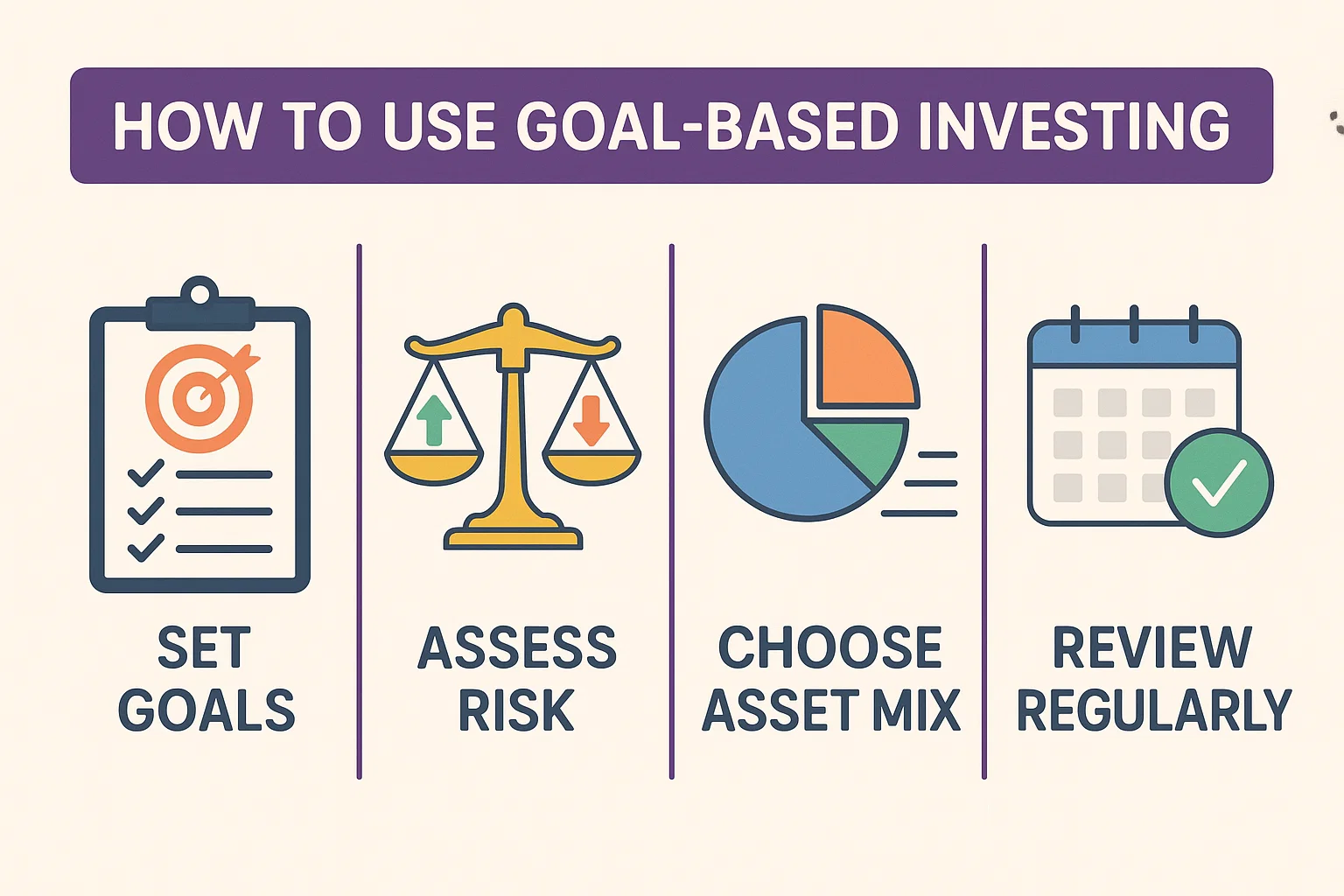
🔢 7 Steps to Use Goal-Based Investing
1. 🎯 Identify Your Goals
List your short, medium, and long-term goals such as:
-
Emergency fund
-
Child’s education
-
Buying a house
-
Retirement
Define a timeline and required amount for each.
2. 🧮 Estimate the Cost of Each Goal
Use a calculator to estimate the future value of your goal, factoring in inflation. For example, a ₹10 lakh goal today might need ₹16 lakh in 10 years at 5% inflation.
3. 🧠 Match Goals to Investment Instruments
| Goal Type | Time Horizon | Risk Profile | Ideal Investment |
|---|---|---|---|
| Emergency | 0–1 year | Low | Liquid Funds, FD |
| Education | 5–10 years | Moderate | Mutual Funds |
| Retirement | 10+ years | High | Equity, NPS |
4. 💸 Choose the Right Asset Allocation
Distribute your money based on goal priority and risk tolerance. Younger investors can take on more equity exposure, while nearing-retirement goals may need stability.
5. 📆 Automate Your Investments
Set up SIPs (Systematic Investment Plans) for each goal. Automation helps with consistency and removes emotion from the equation.
6. 📊 Track Progress Regularly
Use apps or Excel to monitor your goal progress. Rebalance your portfolio annually if some goals are off-track.
7. 🎉 Adjust and Redeem Wisely
As you approach your goal, shift to safer assets like bonds or debt funds. Avoid last-minute market risks by planning your exit strategy.
🔗 Useful Links – bit2050.com
🌐 Resources
❓ FAQ – Goal-Based Investing
Q1. Is goal-based investing better than regular SIPs?
Yes. It brings clarity and purpose to your SIPs by aligning them with specific outcomes.
Q2. Can I have multiple investment plans for different goals?
Absolutely. Each goal should ideally have its own investment plan with appropriate risk and time horizon.
Q3. How do I prioritize my goals?
Start with essential needs (emergency fund, insurance), followed by medium goals (home, car), and lastly long-term goals (retirement).
Q4. What if my goal amount changes?
Re-calculate using a goal-tracking app or calculator, then adjust your SIPs or asset allocation accordingly.
Q5. Should I include gold or crypto in my goal-based portfolio?
Yes, for diversification, but keep them to <10% unless the goal specifically aligns with these asset types.
✅ Final Thoughts
Goal-based investing transforms your financial journey from confusing to crystal clear. It helps you invest with intention, measure progress, and stay motivated along the way.
Ready to get started? Explore more personalized investment guides only on bit2050.com – your home for smart financial freedom.


