📘 Introduction
For centuries, gold has been a symbol of wealth. In 2025, it’s still a go-to investment, especially during market volatility. But is it really a smart addition to your portfolio?
Let’s explore the pros and cons of gold as an investment, so you can make an informed decision backed by facts.
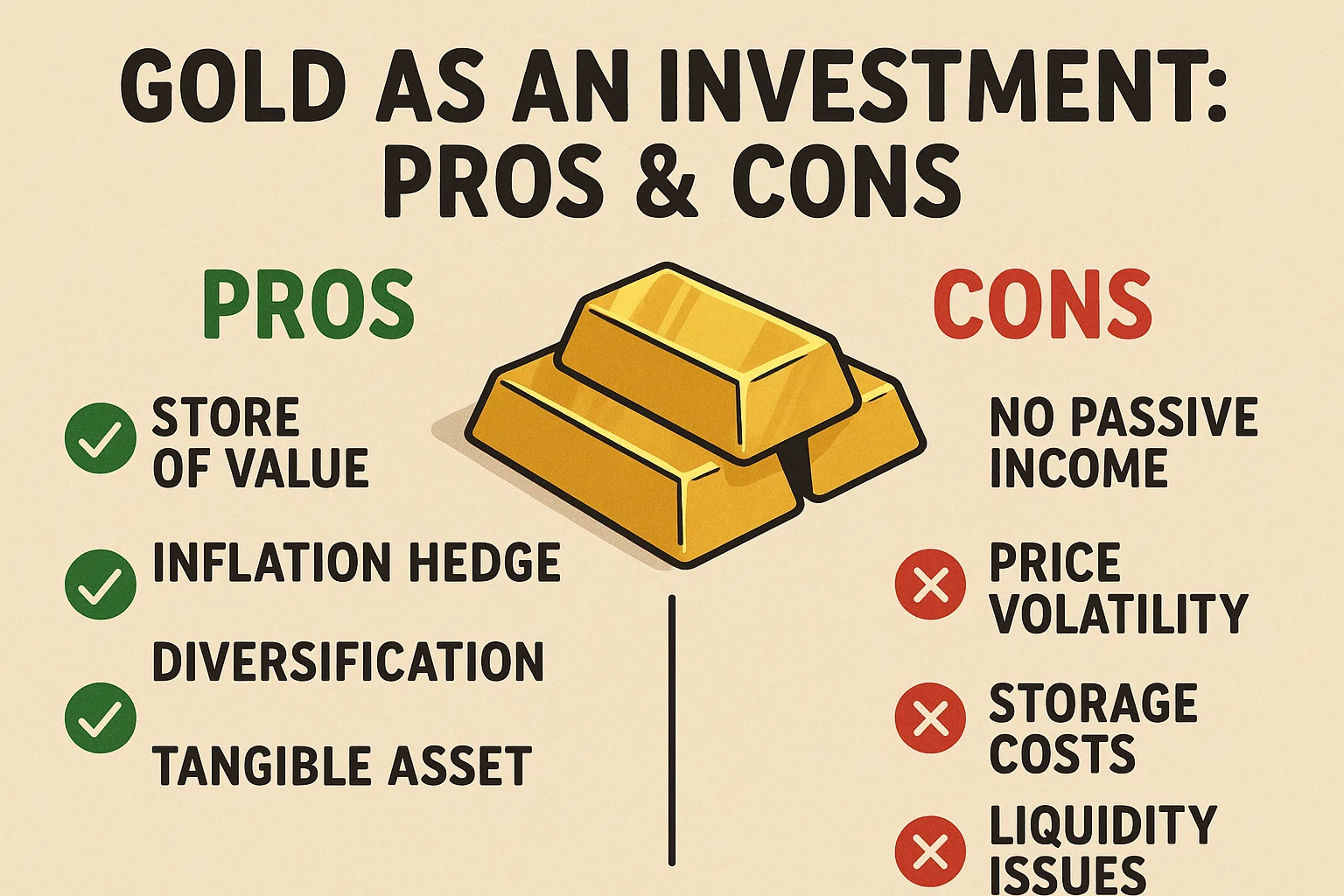
✅ Pros of Gold as an Investment
1. 🛡️ Hedge Against Inflation
Gold often retains value even when fiat currency loses purchasing power. It’s a solid option when inflation spikes.
2. 🌍 Global Acceptance
Gold is recognized worldwide—no matter where you go, its value is understood and accepted.
3. 🧳 Portfolio Diversification
Adding gold to your asset mix reduces risk and volatility, especially during economic downturns.
4. 📉 Inverse Correlation to Stocks
Gold typically performs well when the stock market crashes, offering a cushion during bearish phases.
❌ Cons of Gold as an Investment
5. 💰 No Passive Income
Unlike stocks or real estate, gold does not generate dividends or rental income.
6. 🔒 Storage and Security Costs
Physical gold requires safe storage and may involve bank locker fees or insurance costs.
7. 📈 Volatile Short-Term Prices
While stable long term, gold prices can fluctuate dramatically in the short run, making timing tricky.
🔗 Useful Links – bit2050.com
🌐 Resources
❓ FAQ – Gold as an Investment
Q1. Is gold a safe investment in 2025?
Yes, especially during inflation or geopolitical uncertainty. However, it’s best as part of a diversified portfolio.
Q2. What’s better: physical gold or gold ETFs?
Gold ETFs offer easy liquidity, no storage hassle, and are tax-efficient compared to physical gold.
Q3. How much gold should be in my portfolio?
Experts suggest 5% to 10% of your total investments in gold, depending on your risk appetite.
Q4. Can gold beat inflation?
Historically, gold has preserved purchasing power, making it a reliable inflation hedge.
Q5. Does gold outperform stocks?
Over long periods, stocks outperform gold in terms of returns. But gold shines during economic turmoil.
✅ Final Thoughts
Gold as an investment remains a timeless hedge against uncertainty. While it doesn’t yield passive income, its role in diversifying your portfolio and protecting wealth is unmatched.
If you’re planning to balance risk in your financial life, consider gold as a strategic asset — not a magic bullet. Explore more smart investment guides at bit2050.com.